.svg)
.svg)
.svg)
.svg)
.svg)






.avif)


.svg)
.svg)
.svg)


The Pharma Commercial Stack Is Being Rewritten And Most People Are Missing It

Overview
I’ve spent the better part of the last decade inside pharma (McKinsey, ZS) working closely with some of the largest pharmaceutical companies on Commercial and AI transformations. Over the past year building Synthio, I’ve had a rare vantage point. I’ve been able to see patterns form across leadership conversations and pilot programs, where I became privy to moments of frustration that mostly exist in pockets across the organization.
Something important is changing. Not in the way it’s usually discussed at conferences or framed as digital transformation or AI enablement. It shows up more quietly, in the realization that incentive structures which held for decades are no longer working, and that long-standing assumptions are no longer supported by the numbers.
We are still debating whether CRM programs should take eighteen months or twenty-four. Still rebuilding internal platforms every few years as leadership changes hands. Still treating billion-dollar field forces as fixed points in the system. And yet beneath all of this activity, the ground has shifted.
After a decade in pharma and now building infrastructure for the industry, one thing is clear to me. Companies that see the shift early will move faster than what feels comfortable today. The rest will spend years modernizing systems while the market moves on.
What follows is my attempt to describe what I’m seeing, before it becomes obvious in hindsight.
Uncomfortable Truth About Enterprise Software
Here’s what rarely gets said out loud. The systems running pharma today were designed for a world that no longer exists.
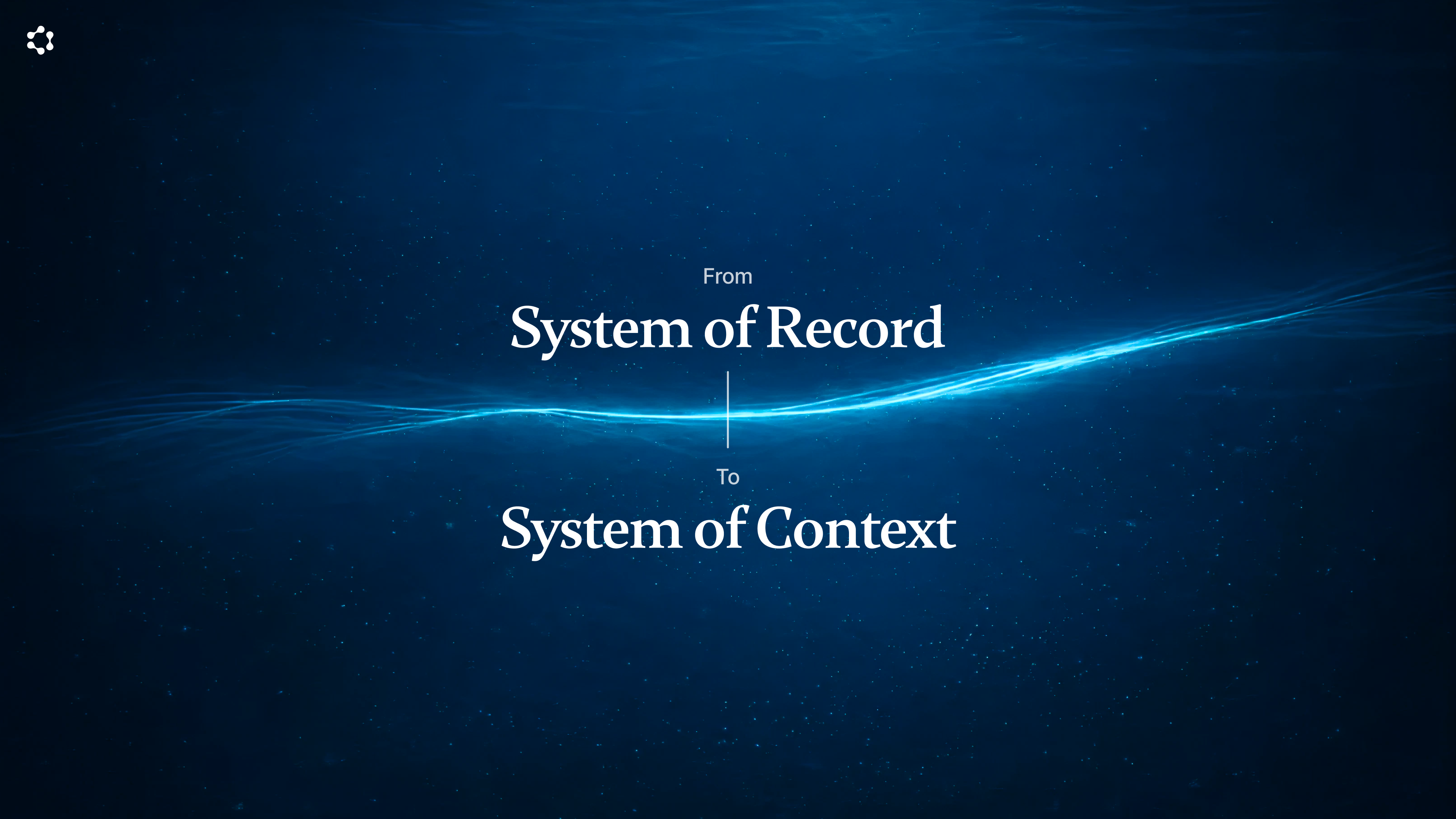
Traditional systems of record (like CRMs) are losing ground to AI-driven systems of context. Early enterprise software simply wrapped databases with forms and static dashboards. CRMs were essentially a UI with 20 fields on a page. It’s now become clear that static dashboards are dead. Studies show 92% of data teams’ time is consumed by manual tasks to make up for the shortcomings of legacy BI tools.
AI collapses the gap between intent and execution. Instead of passively storing data, enterprise systems are evolving into autonomous workflow engines. As Andreessen Horowitz General Partner Sarah Wang observes, “models can now read, write, and reason directly across operational data, turning ITSM and CRM systems from passive databases into autonomous workflow engines.”
In practice, this means an employee can express a high-level intent (e.g., “find all enterprise customers at risk and draft renewal plans”) and an AI agent dynamically interprets context across databases, executes the necessary queries or actions, and delivers results in real time. The experience transforms into a dynamic agent layer that understands natural language and context.
The old system-of-record UI fades into a background persistence layer, with its strategic importance ceded to whoever controls this intelligent agentic interface employees actually use.
.png)
We’re seeing this play out in pharma with our product, Jarvis. Instead of asking reps to document work after the fact, Jarvis reasons in real time across product knowledge, account history, and live interactions. Across our deployments, this translated into 6x improvement in note capture quality, over 40% improvement in HCP reach, and measurable gains in prep quality and follow-through. All without adding headcount. Work happens faster because the system understands context first and records second.
This shift is forcing incumbents to adapt. Industry giants like Salesforce and Veeva (the dominant CRM platforms in pharma) have built empires on system-of-record models, but even they recognize change is needed. Veeva is literally splitting off from Salesforce’s infrastructure by 2025 to gain more control and innovate faster. Why? Because they understand customers no longer tolerate clunky 20-field forms and siloed data. In an AI-first world, a sales rep or support agent expects to simply ask, “What’s going on with account X?” and have the system contextually assemble the answer from all relevant data. As one of our engineers put it bluntly: "static dashboards are dead".
In an AI-first world, the interface builds itself around user intent, not the other way around.
A whole new layer of intelligence software is up for grabs. The winners will be those who provide the most context-aware, autonomous user experiences on top of commoditized data stores. Others will cling to selling bare databases with static charts.
What people actually want is simple. A system that understands context and helps them act immediately.
Once you experience such a system, there is no going back.
Pharma’s Build Versus Buy Cycle Is Breaking
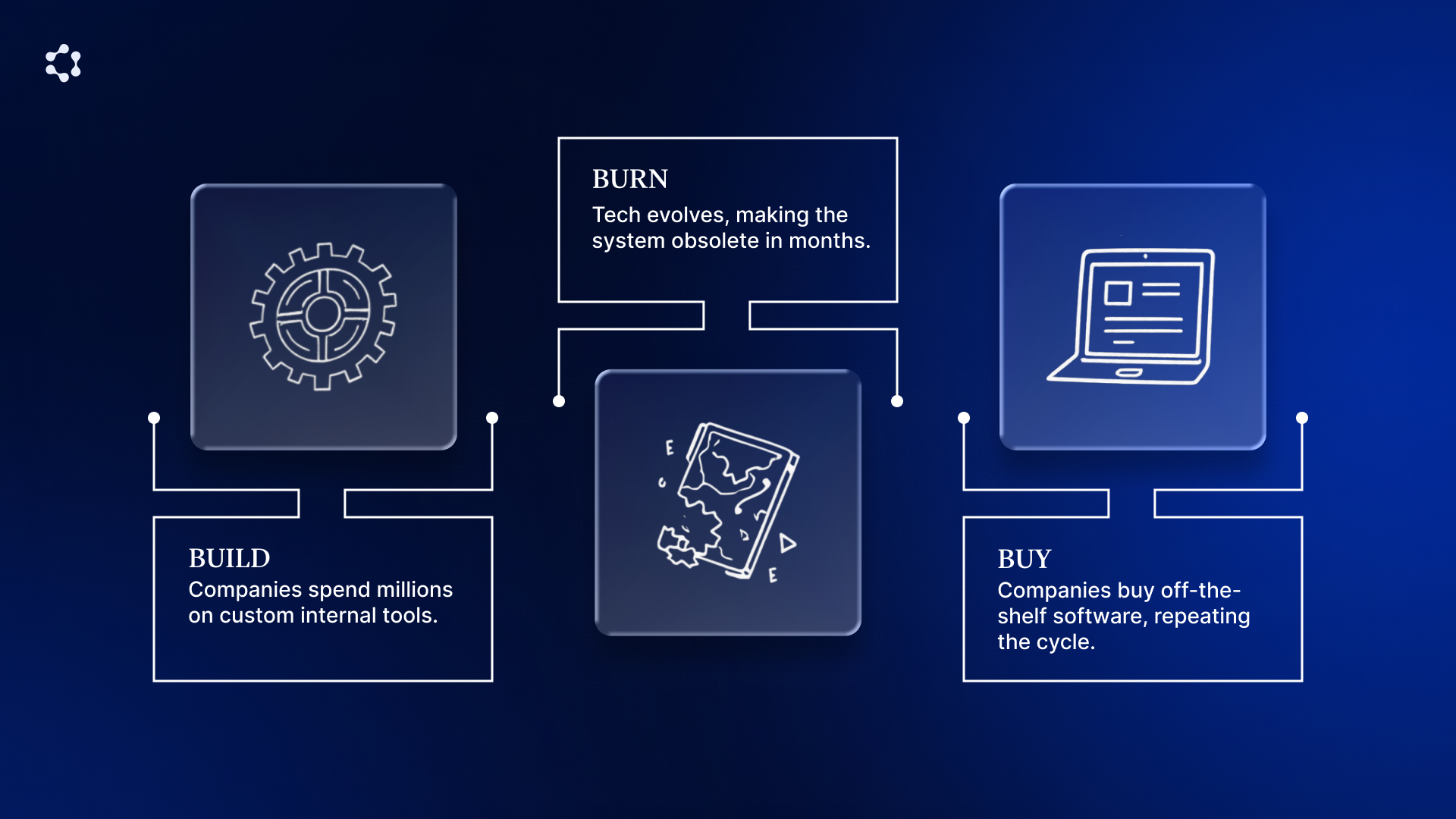
No industry illustrates the risks of clinging to old IT models better than pharmaceuticals. For decades, pharma companies oscillated between building internal tools (often outsourced to one of the usual suspects: McKinsey, BCG, ZS, Accenture, etc.) and buying off-the-shelf software for their commercial and R&D needs. This cyclical “build, burn, then buy” pattern has repeated itself for years. In the age of AI, however, this strategy is reaching a breaking point.
Technology is evolving so rapidly that a custom system built in-house can become obsolete before it’s even fully deployed. When you rebuild systems internally now, you're locking into architectural decisions that age in months, not years. Pharma leaders are starting to realize that if they shift focus away from what they do best (scientific innovation and drug development), they “lose the war.” In a landscape where AI expertise is scarce and evolving, those expenses are magnified by the need to hire incredibly expensive AI talent and provide ongoing training and support. It’s no surprise many companies now lean toward buying or partnering for AI solutions. The build vs. buy calculus has shifted firmly toward buy (or partner) for most AI-driven capabilities, unless a bespoke solution truly confers strategic advantage.
The implication is that hybrid strategies will win out: savvy pharma companies are partnering with AI startups or vendors for speed, while allocating internal resources to deeply integrate these tools and address proprietary needs. This lets them ride the wave of external innovation (foundation models, agentic workflows, etc.) without getting bogged down reinventing the wheel. It’s a notable pivot from the past where owning the system outright was a point of pride. Today, the pride comes from delivering outcomes faster than competitors however you achieve it.
There’s also a very real threat animating this change: the possibility that tech companies themselves will encroach on pharma’s turf. We’re already seeing hints of this. In 2023, Insilico Medicine, originally an AI platform company, advanced an AI-discovered drug into human Phase II trials, the first fully AI-designed drug to reach that stage. The founder remarked that he “never imagined in the early days I’d be taking my own AI drugs into trials”, but they realized to prove their tech, they had to do exactly that. Read that again. A software company decided the best go-to-market strategy was to become a pharma company. The gap between technology and life sciences is narrowing, and those who straddle both (or bring both via partnership) will define the future of medicine.
The Evolving Pharma Commercial Model: AI-Native Engagement
Nowhere is the shift more visible than in pharma’s commercial go-to-market model.
In the 1990s, pharma sales was built on brute-force scale. Companies hired 5,000+ reps, rented out stadiums for sales rallies, and backed blockbuster launches with billion-dollar field forces blanketing physician offices. That model worked in a world where access was scarce and information flowed slowly.
Today, that foundation is cracking. Several forces are converging to fundamentally reshape how pharma engages healthcare professionals.
1. Clinician expectations have changed
Doctors and nurses now expect the same experience they get everywhere else: answers in seconds, not days; information tailored to their context, not generic brochures; and sources that are credible and non-promotional. The patience for scheduled detailing and static PDFs is gone.
This shows up clearly in behavior. Roughly two-thirds of U.S. physicians now restrict in-person rep access, and those who do engage often allocate only a few minutes. The demand has shifted from scheduled visits to on-demand intelligence.
2. Real-time, on-demand support is becoming table stakes
Clinicians increasingly want instant access to medical information through AI-powered agents on websites, portals, or voice lines. Instead of waiting weeks for a rep or searching through hundreds of pages, they expect systems that can reference the latest guidelines and answer questions immediately, in context.
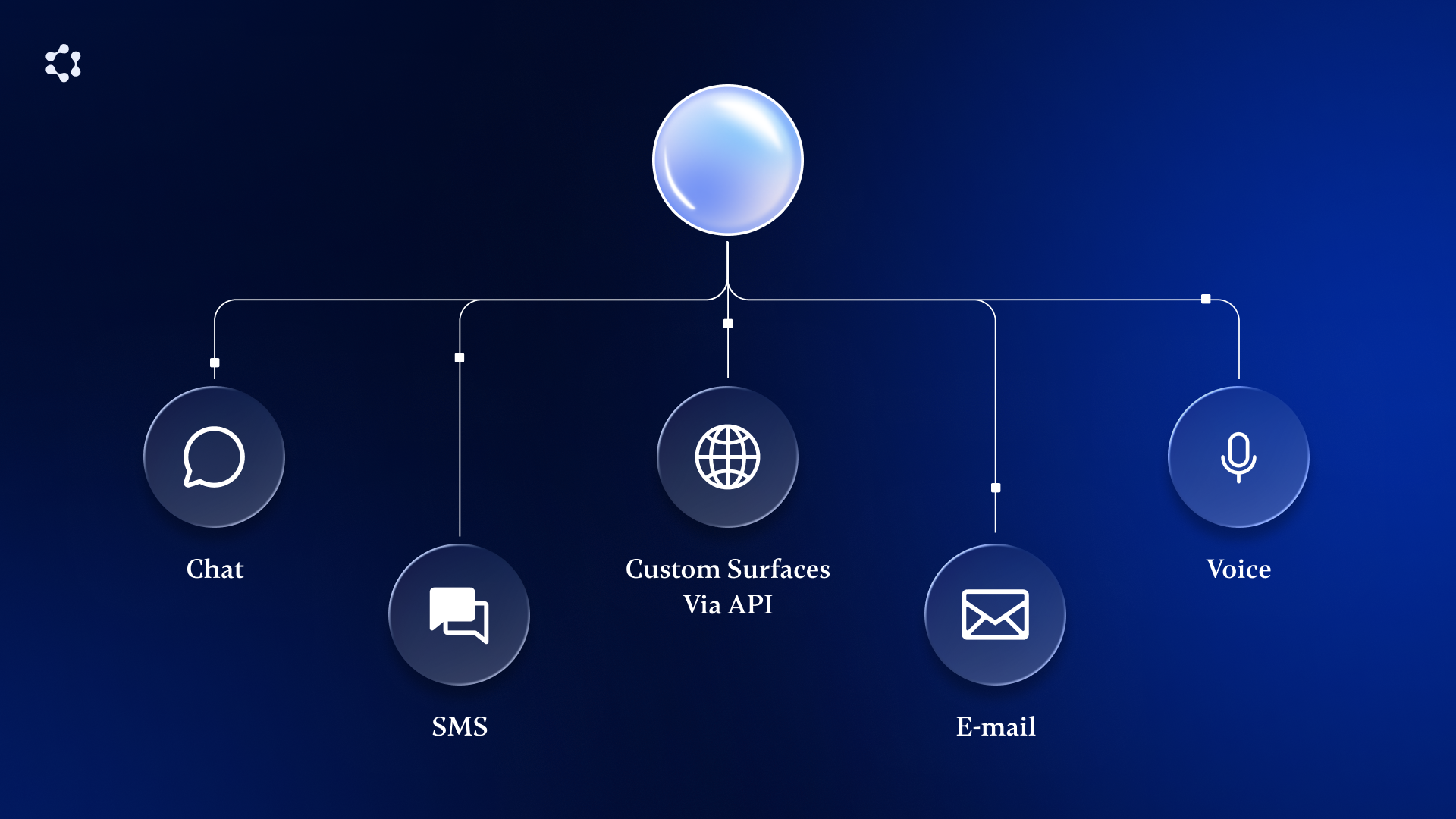
This is where AI-native engagement models begin to replace traditional workflows. With Ather, our AI platform for HCP engagement, we’re already helping several pharma companies deliver compliant, multimodal interactions across chat, voice, and web, meeting clinicians where they already are rather than pulling them into rigid sales processes.
3. Always-on virtual reps extend reach beyond human limits
Even the best field force can’t cover every community hospital, rural practice, or late-night question. That’s why AI virtual reps are becoming a critical layer. Brand-trained, multimodal agents that can speak, chat, and surface information with the depth of a human rep, available 24/7.
This isn’t theoretical. Voice agents handling things like a 2 AM cold-chain question from a pharmacist are already being piloted. The result is a hybrid field model: a smaller, more focused human team handling high-value, relationship-driven engagements, augmented by digital agents that scale expertise across geographies, time zones, and the long tail of HCPs.
4. Market scale is outpacing human sales capacity
A major driver behind this shift is the nature of new therapies. Take GLP-1 drugs like semaglutide. Their potential market is so broad that nearly every primary care physician could be a prescriber. No company can hire enough reps to detail tens of thousands of PCPs consistently, nor would it be cost-effective when many prescribe infrequently but still need support.
Technology becomes the only viable path to scale: AI agents, digital education, and context-aware engagement layered on top of leaner human teams.
What this adds up to
Pharma commercial is moving from a push-based, rep-driven model to a pull-based, information-driven model. The new mantra is simple: meet clinicians where they are, with exactly what they need, when they need it.
That’s a fundamental break from the past. It’s contrarian in an industry built on personal touch, but the data increasingly suggests that a leaner, AI-enabled model doesn’t just reduce cost. It can actually improve HCP satisfaction, delivering timely, relevant support instead of interruptions and hard sells.
If done right, this evolution leads to better-informed clinicians and, ultimately, better patient care, with the right information flowing at the speed of thought rather than the pace of a sales calendar.
Direct-to-Patient: The Consumerization of Pharma
Another seismic shift underway is the consumerization of pharma. Historically, pharma operated as B2B2C: companies sold to physicians and negotiated with payers, while patients remained one step removed. That buffer is eroding. Pricing pressure, digital distribution, and policy changes are pushing pharma directly toward the patient.
A clear signal came in late 2025 with TrumpRx, a government-facilitated direct-to-consumer drug purchasing platform that allows patients to buy certain medications directly from manufacturers. The message was unmistakable: adapt to transparent, direct channels or have them imposed. By late 2026, most drugs are expected to be available through some form of direct ordering.
At the same time, big pharma is moving DTC on its own. Partly to bypass restrictive insurers, partly to own the patient relationship before new intermediaries do. But going direct raises the bar. When you sell to patients, you own the experience. Ordering, education, pricing clarity, and ongoing support all become your responsibility.
This is where differentiation shifts. In markets with multiple comparable therapies, patients gravitate toward companies that provide the best support ecosystem. We’ve seen this firsthand. At Synthio Labs, our AI Nurse recently supported an eczema brand by speaking with over 5,000 patients in just 48 hours, handling education and onboarding at a scale traditional models can’t match.
.png)
Pharma will need to invest in brand equity and user experience much like Apple or Nike do for their products. After all, if there are five similar drugs for a condition (which is increasingly common in areas like diabetes, autoimmune diseases, etc.), a patient who has a choice might gravitate toward the company that provides the best support ecosystem, patient apps, nurse helplines, hassle-free delivery, financial assistance, you name it.
In a commoditizing market, trust and experience become key differentiators. We can draw a feather from Apple or Nike: they took commodity products and made their brands synonymous with quality, reliability, and service.
I’m optimistic that this evolution will not only drive better business outcomes for those companies, but also better health outcomes. A patient who feels supported and informed is more likely to stay adherent to therapy and advocate for their own health. In the end, treating patients more like valued customers than like end-recipients of a product is simply the right thing to do.
Conclusion: Building for the world that’s arriving
The themes above , the rise of AI systems of context, the pivot in pharma from internal-build to external partnerships, the AI-enabled transformation of sales/marketing, and the direct-to-consumer shift are all interrelated pieces of a larger story. At its heart, this is a story of tech-driven disruption in some of the most entrenched areas of enterprise and healthcare. My view is admittedly contrarian: it challenges the status quo assumptions that big software and big pharma will continue business as usual. It foresees a future where employees have smarter tools and less drudgery, doctors and patients get information and support at lightning speed, and life-saving therapies reach people more efficiently (and perhaps more affordably) than today.
In summary, we are witnessing the twilight of the passive, record-keeping software era and the dawn of autonomous, context-aware systems that actually get things done. The interface of the future is intelligence; the business of the future is empathy and efficiency.
2026 will be the year of better, smarter AI systems, not just models. Systems that understand context across voice, text, and data, act with intent, and respect the complexity (compliance, regulations) of Pharma while removing unnecessary friction.
At Synthio, this is the shift we’re betting on. And I think we're closer than most people realize.
The future isn’t up for debate. Participation is.